

The Real Cost per Cup of Premium Loose Leaf Tea
Working out whether premium loose leaf tea is worth it starts with a simple sum, not a taste test. Supermarket bags look cheaper on the shelf, but the gap narrows fast once you count how many cups each format actually delivers.
Below, we look at the signs that help you judge whether a premium tin is worth its price, from the grade printed on the box to the way the leaves behave in hot water.
Whole Leaf vs Tea Bags: What You Actually Taste
Whole leaf tea is the intact, unbroken leaf of the Camellia sinensis plant, dried and graded by size and style.
Intact leaves release flavour more slowly and evenly as they steep, which gives you room to adjust: a shorter steep for a lighter cup, a longer one for more body.
Whole leaves expand as they steep, so they need space to unfurl. Read our full comparison of whole leaf and tea bags for the deeper breakdown of which suits different drinkers.
How to Choose Loose Leaf Tea That Earns Its Price
Choosing well comes down to reading the grade and matching the leaf to how you actually drink. Most buyers skip both steps and end up paying premium prices for a tea that never suited their routine.
Read the Grade, Not the Box
Tea grading uses letters, not adjectives. On a Ceylon black tea you might see FBOPF, OP1 or OPI. The letters describe leaf size and style, not quality in isolation, but they do tell you what you are buying.
- FBOPF indicates a fine, wiry leaf with tips, often a higher-grade black tea
- OP1 means orange pekoe, a large leaf style, usually lighter in the cup
- BOP is a broken leaf, faster to brew and stronger
A box that says "premium" without a grade is asking you to trust the marketing. A box that names its grade is showing its work.
Match the Leaf to Your Routine
A delicate high-grown leaf rewards a slow morning. A strong broken leaf suits a rushed one. If you drink tea at your desk between meetings, a leaf that tolerates a long, forgiving steep will serve you better than a fragile one that turns bitter the moment you look away.
How to Brew Loose Leaf Tea for a Fair Comparison
Brewing loose leaf tea fairly means controlling three things: water temperature, steeping time and the ratio of leaf to water. Change any one and you are no longer comparing leaf quality, you are comparing mistakes. Get all three right once and the comparison becomes honest.
Start with freshly boiled water cooled slightly for black tea, around 90 to 95 degrees Celsius. Use roughly one teaspoon of leaf per cup, or about 2 to 3 grams.
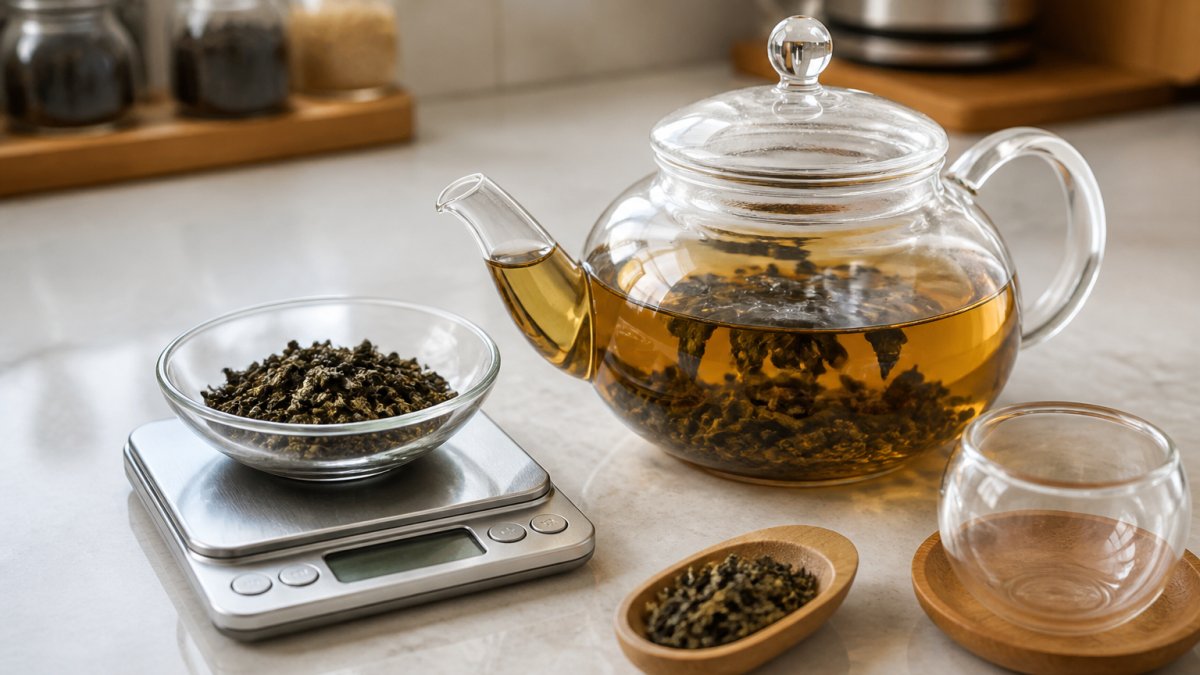
Water-to-Leaf Ratio: The Step Most People Skip
Most guides tell you to use "one teaspoon per cup" and leave it there. That is a starting point, not a rule. A large-leaf OP1 takes up far more volume per gram than a fine FBOPF, so the same spoon delivers very different strength.
Weigh your leaf once, note the number, then adjust to taste. Two to three grams per 200ml is a sensible baseline for black tea.
The Equipment Barrier: What You Actually Need to Start
The most common reason people never test premium leaf is the belief that they need a full brewing setup. They do not.
- A simple basket infuser, a stainless steel mesh basket that sits in your existing mug. This is the lowest-cost entry point and produces a perfectly fair cup. The only trade-off is that fine particles can slip through the mesh.
- A glass teapot with a built-in strainer, gives the leaf more room to expand and lets you watch the infusion, which is genuinely useful while you are learning. Costs more than a basket but lasts for years.
- A gaiwan or a lidded brewing vessel, the traditional approach, excellent for re-steeping and for controlling strength cup by cup. It has a short learning curve but rewards practice.
A common pattern is that beginners buy an expensive brewing system first and a cheap tea second, which is the wrong way around. Buy a modest infuser and a good leaf, and let the equipment follow your habit.
Temperature and Water Circulation
Water temperature does different work on different leaf styles. Black tea at 90 to 95 degrees extracts the full body without scorching the leaf.
Circulation matters as much as heat. Whole leaves need space to unfurl, and water needs to move around them. A cramped basket packed with leaf brews unevenly, some of the leaf over-extracts while the rest barely opens.
Re-Steeping: The Test That Separates Grades
One of the clearest ways to judge whether a premium leaf earns its price is to steep it a second time.
Try it with the same leaf and the same water: steep, pour, then steep again for slightly longer. If the second cup still tastes like tea rather than wet cardboard, you are drinking leaf that was worth paying for.
For a step-by-step walkthrough, see how to brew whole leaf tea for a richer cup.
The Island of Tea - Special Ceylon Black Tea - 100g Loose Leaf Tea →
How to Store Loose Leaf Tea So It Stays Worth It
Storing loose leaf tea well means protecting it from four things: light, heat, moisture and air. Whole leaf tea holds its aroma longer than fannings, but it still fades. A premium tin only stays premium if you treat it that way after opening.
Why Tea Goes Stale
Tea staling is not one process but several running at once. The volatile aromatic compounds that give a fresh leaf its smell are the first to go, they oxidise on contact with air and evaporate faster at higher temperatures.
Whole leaf resists this better than fannings because there is less exposed surface area per gram. A broken leaf has far more cut edges for oxygen and moisture to attack, which is one reason bagged tea tastes dull sooner after opening.
How Long Tea Actually Keeps
There is no single expiry date for tea, but there are sensible working windows. A well-sealed black tea in an airtight container kept cool and dark will hold good flavour for around 12 to 18 months from packing.
These are working windows, not hard rules. The reliable test is sensory: smell the dry leaf before you brew. Fresh leaf smells like the tea it will become. Stale leaf smells like dust, hay or nothing at all.
Choosing the Right Container
The container matters as much as the storage location. The trade-offs are straightforward:
- The original foil pouch, often the best option, because flavour-sealed foil blocks light and air better than most decorative tins. Press the air out and reseal the zipper after each use.
- An opaque airtight tin, good for daily use, provided it seals properly and does not let light through. A clear glass jar on a sunny bench is the worst of both worlds.
- A decorative jar, fine for display, poor for storage. Light passes straight through and the seal is usually loose.
Do not transfer the leaf to a decorative jar that lets light through. If you want to decant for daily use, keep the bulk of the leaf in its foil pouch in a cupboard and refill a small tin as needed.
Where to Keep It
Keep the leaf in an airtight container away from the stove and the window. The two worst places in most kitchens are directly above the kettle and on an open shelf beside the sink, one is hot, the other is humid. A cool, dark cupboard away from both is ideal.
Our tins are packed in flavour-sealed foil pouches with a zipper lock.
Buy in Quantities You Will Actually Drink
Buy in quantities you will actually drink within a few months. A large tin that sits half-empty for a year is money spent on stale tea. If you drink one cup a day, a 100g tin lasts roughly six to eight weeks at standard strength, a sensible size to buy before committing to a larger one. Our guide to storing premium Ceylon loose tea covers the specific rules for keeping leaf fresh.
Here are the working storage windows the article gives for keeping leaf at its best.
Tea type or stage |
Working window |
Note |
|---|---|---|
Sealed black tea, airtight, cool and dark |
Around 12 to 18 months from packing |
Holds good flavour |
Green and lighter styles |
Best drunk within 6 to 12 months |
Fade faster |
Opened tin |
Finish within two to three months |
Clock speeds up once opened |
100g tin at one cup a day |
Roughly six to eight weeks |
Sensible size before buying larger |
What Premium Tea Buys You Beyond the Leaves
What you pay for in a premium tin goes well beyond the leaf.
Consistency matters more than most drinkers realise. A well-blended tea tastes the same in March as it did in September, which is what makes it reliable enough to build a daily habit around.
There is also the ritual. A tin you open deliberately, a leaf you measure, a pot you give two minutes of attention.
Pick Your First Premium Tin with Confidence
If you are ready to test the arithmetic for yourself, start with a single tin and brew it carefully.
If you want to keep the spend lower while you experiment, Specialty Classics Ceylon Premium is 100% pure Ceylon black leaf with no additives at $15.99.
When you are ready to buy, our guide on buying premium loose leaf tea online covers what to check before you order, and you can browse our first premium tin options to see the full range.
Frequently Asked Questions
Are loose tea leaves better than tea bags?
It depends on what is in the bag. Whole leaf tea, such as the FBOPF special grade in The Island of Tea range, is a fine, wiry leaf with a dark, rich brew. Many supermarket bags hold fannings or dust, the small fragments left after sorting, which release colour fast but lose aroma quickly. Premium loose leaf tea is better when the leaf is intact and fresh, not simply because it is loose.
Are tea leaves more expensive than tea bags?
The tin usually costs more upfront, but the gap narrows per cup. A 100g tin of Specialty Classics Ceylon Premium at $15.99 is about 16 cents per gram, and a standard 2g serve works out to roughly 32 cents. Compare that to the per-bag price of a supermarket box and the difference is smaller than the shelf price suggests.
How can you tell if loose leaf tea is good quality?
Look at the leaf first. Whole, unbroken leaves with a consistent size and colour suggest careful sorting, while lots of dust at the bottom of the pouch points to lower grades. Smell the dry leaf: fresh tea has a clear aroma, not a flat or papery one. Brew a cup and check the liquor for brightness and a clean finish. A grade code such as FBOPF or OP1 on the pack is a useful starting signal.
How should you store loose leaf tea to keep it fresh?
Keep it away from light, heat, moisture and strong smells. The metal caddies the Island of Tea range comes in are a sealed storage option. Store it in a cool cupboard rather than beside the stove or kettle. Buy amounts you will drink within a few months, and reseal the inner foil pouch if you decant only part of it.
The real question is not whether premium loose leaf tea costs more, but whether you are set up to taste the difference. Basilur Tea brings the best of Ceylon directly to you, with pure Ceylon leaf, flavour-sealed foil pouches inside metal tin caddies, and sophisticated packaging that makes a tin worth giving as much as keeping. Get started with Basilur Tea and find the tin that makes your next cup worth the wait.










Comments (0)
There are no comments for this article. Be the first one to leave a message!