

Quick Comparison: Best Herbal Tea for Evening Relaxation
Finding the best herbal tea for evening relaxation comes down to matching the blend to how you unwind. This guide from Basilur Tea compares five caffeine-free blends worth keeping in the cupboard, from a dedicated Sleep blend to floral and fruit-forward options.

Blend |
Flavour Profile |
Key Botanicals |
Best For |
|---|---|---|---|
Sleep |
Floral, softly sweet |
Chamomile, lemon verbena, rooibos, lavender |
A structured bedtime ritual |
Calm |
Floral, warm |
Chamomile, rosehip, lavender, rose petals |
Slowing down after work |
Chamomile |
Gentle floral |
Chamomile |
A simple, familiar cup |
Bedtime Apple with Elderflower |
Fruity, delicate |
Chamomile, rooibos, elderflower, apple |
Anyone who dislikes floral tea |
Calm Jasmine with Peach |
Sweet, fragrant |
Jasmine, peach |
A soothing indulgence |
How We Chose the Best Herbal Tea for Evening Relaxation
Our selection focused on caffeine-free botanicals, flavour you would look forward to, and how easily each blend fits a nightly routine. Every blend below is a herbal infusion, with no true tea leaves and no caffeine.
The compounds that do the work
Evening herbs are not interchangeable. Each carries a different active constituent, and knowing which is which helps you match a blend to what you want.
- Chamomile, apigenin, a flavonoid that binds to benzodiazepine receptors in the brain, behind the gentle sedative effect most people associate with a night-time cup.
- Lavender, linalool and linalyl acetate, the volatile oils behind its calming reputation. These evaporate fastest, which is why packaging matters.
- Lemon balm, rosmarinic acid and other polyphenols, studied for anxiety and restlessness.
- Passionflower, flavonoids including chrysin and vitexin, traditionally used for sleep quality and nervous tension.
- Valerian root, valerenic acid, which acts on GABA pathways. It is the most sedative common evening herb and the most studied for sleep latency.
- Rooibos, naturally caffeine-free and low in tannins, a sweet, non-bitter base in blends rather than a sedative itself.
A blend that layers several, chamomile for the sedative base, lavender for aromatic calm, lemon verbena or rooibos for body, can offer a more complex experience than a single-herb cup.
Why steeping chemistry changes the cup
We tested steep time and temperature for every blend rather than assuming box instructions were optimal. Bitterness is almost always an extraction problem, not a herb problem.
What the evidence actually shows
The research on evening herbs is real but modest. Chamomile, valerian, lemon balm, passionflower and lavender all have published studies suggesting benefits for sleep quality, sleep latency or anxiety, but most are small, and effects are gentle. Herbal tea is a supportive ritual, not a treatment for insomnia. If you have a persistent sleep problem, see your GP, not a tea aisle.
What the evidence does support is consistency.
Practical details we weighed
Beyond the chemistry, we looked at what decides whether a blend survives past week two. Foiled envelopes help preserve aromatics, as calming properties can fade as oils evaporate. We favoured blends with a clear botanical list rather than vague "natural flavours," because you cannot check a herb against your medications if you do not know what is in the cup.
1. Herbal Infusions - Sleep: The Bedtime Ritual Blend
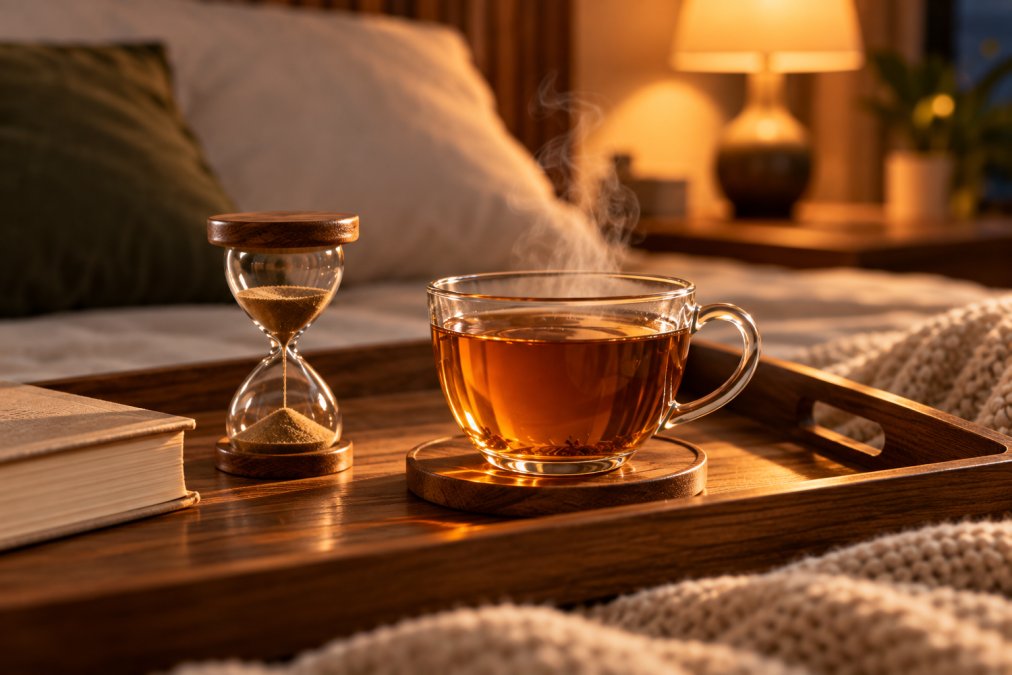
The Sleep blend is the most purpose-built option here, and our top pick for anyone building a proper wind-down routine. Chamomile and lemon verbena do the heavy lifting, while rooibos and lavender round out the cup with a naturally sweet finish.
2. Herbal Infusions - Calm: The Floral Wind-Down Cup
Calm leans further into florals than the Sleep blend, and that is its strength. Chamomile offers a soothing quality, rosehip adds gentle warmth, and lavender plus rose petals bring comfort.

3. Herbal Infusions - Chamomile: The Gentle Classic
Chamomile has been the default evening herbal infusion for good reason, and this single-botanical version keeps things simple. It offers a soothing floral cup that can help relax both body and mind.

4. Organic Bedtime Apple with Elderflower: The Fruit-Forward Nightcap
Not everyone wants flowers in their cup, and this blend solves that. Chamomile and rooibos contribute to a calming base, while elderflower and a crisp apple note lead the flavour.
Herbal Infusions - Sleep - 20 Foiled →
5. Organic Calm Jasmine with Peach: The Soothing Indulgence
Jasmine with peach is the most indulgent cup on this list, and it earns its place for a different reason: it gives you something to look forward to. The smooth sweetness of jasmine meets the delicate sweetness of peach for a soothing, slightly invigorating sip.
Is Organic Herbal Tea Worth the Cost?
Organic herbal tea is worth the cost when the certification covers the botanicals you care about, and less so when it is simply a label on a box. For an evening cup you drink every night, the answer turns on three things: what the certification guarantees, how the herbs are packaged, and whether the blend is safe alongside anything else you take before bed.
What organic certification actually guarantees
An organic claim on an Australian-sold tea should be backed by a certification you can verify. The two you will see most often are NASAA Certified Organic and Australian Certified Organic (ACO), both accredited under the national organic standard. A box that says "organic" with no certifier name, number or logo is a marketing claim, not a verified one.
Freshness and packaging decide more than the label
Delicate aromatics can evaporate over time. Foiled envelopes help protect them better than a loose box or clear cellophane, as they block light, air and moisture.
How often you drink it
The organic premium is easiest to justify on a nightly ritual. One cup a night works out to a modest cost per cup over a month, and the ritual itself is part of the benefit. If you drink herbal tea occasionally, the premium buys you less.
The safety question most guides skip
Cost is only half the value calculation. Before committing to a nightly blend, check what is in it against what else you take, the part most buying guides leave out.
- Sedatives and sleep medications. Valerian, passionflower, chamomile and lavender all have mild sedative activity. Alongside prescription sleep aids, benzodiazepines or sedating antihistamines, they can compound drowsiness. If you are on any of these, speak to your GP or pharmacist before making herbal tea a nightly habit.
- Antidepressants. St John's wort is the best-known interaction risk with SSRIs and related medicines, but not the only herb that warrants a conversation. If you take an antidepressant, run any new nightly blend past your pharmacist first.
- Blood-thinning medication. Chamomile and some other botanicals contain compounds that can interact with warfarin and similar medicines (pubmed.ncbi.nlm.nih.gov). This is a known interaction worth flagging to your prescriber.
- Pregnancy and breastfeeding. Several common evening herbs, including valerian and passionflower, are not recommended without professional advice during pregnancy. Chamomile is generally considered low-risk in normal dietary amounts, but the safest course is to ask.
- Thyroid medication and others with narrow timing windows. Some medicines need to be taken away from herbal infusions because the herbs can affect absorption. Your pharmacist can tell you whether spacing matters for yours.
The verdict
Organic is worth the premium when it comes with a verifiable certifier, fresh foiled packaging and a blend you will actually drink nightly. It is not worth it when the label is unverifiable, the packaging is stale, or the blend contains a herb that interacts with something you take. Buy the certification and the freshness, and check safety first.
Frequently Asked Questions
Which herbal tea is best for relaxation?
Chamomile is the most widely used for evening relaxation, and blends that combine chamomile with lavender or lemon verbena are popular choices. Basilur's Herbal Infusions - Sleep pairs chamomile and lemon verbena with rooibos and lavender for a naturally sweet, caffeine-free cup. If you prefer a floral, rose-forward profile, Herbal Infusions - Calm uses chamomile, rosehip, lavender and rose petals. Both are designed to help you slow down in the evening.
Is it okay to drink herbal tea every night?
Caffeine-free herbal infusions such as chamomile, rooibos and lavender are generally fine as a nightly habit for most people. The main caution is interactions: some herbs can affect how certain medicines work, so check with your GP or pharmacist if you take prescription medication or are pregnant. Rotating between a few blends also keeps the ritual interesting and reduces reliance on any single botanical.
How long before bed should I drink herbal tea?
Aim for 30 to 60 minutes before bed. That gives you time to sip slowly, let the cup cool to a comfortable temperature, and finish your evening routine without rushing. Drinking too close to lights-out can mean a bathroom trip in the middle of the night, which defeats the purpose. Pairing the cup with dimmed lights and putting your phone away makes the ritual more effective.
Are there any side effects to drinking herbal tea at night?
For most people, no. Herbal infusions are caffeine-free, so they will not keep you wired the way black or green tea can. A few points to watch: some herbs have mild sedative effects that can compound with sleep medication or alcohol, and peppermint can trigger reflux in people prone to heartburn. If you are unsure how a specific botanical interacts with your medication, ask your pharmacist before making it a nightly habit.
Do I need organic herbal tea, or is regular fine?
Organic certification mainly affects how the botanicals are grown, not how the tea tastes or how well it helps you unwind. If avoiding synthetic pesticides matters to you, organic blends such as Basilur's Organic Bedtime Apple with Elderflower are a straightforward choice at $14.99 for 18 tea bags. If your priority is flavour and ritual, a well-blended conventional herbal tea can be just as enjoyable.









Comments (0)
There are no comments for this article. Be the first one to leave a message!