
Last Updated: September 20, 2026
What You'll Need to Taste Tea Like a Connoisseur
You need surprisingly little to begin tasting tea more attentively.
A light-coloured porcelain cup or small bowl makes it easier to observe the colour of the brewed tea. A kettle, teaspoon or digital scale, timer and notebook can also be useful.
If you want to compare several teas accurately, weighing the leaves can help maintain consistency because different leaf shapes and sizes do not always fit neatly into the same teaspoon measurement.
Water matters too. Start with fresh water without noticeable tastes or odours, as the water you use can influence the character of the finished cup.
Most importantly, keep your preparation consistent. When comparing teas, try to use the same cup, similar quantities of tea and water, and appropriate brewing conditions.
Step 1: Inspect the Dry Leaf Before You Brew
Before adding water, spend a moment looking at the tea itself.
Notice the size, shape, colour and overall appearance of the leaves. Depending on the tea, you may see long whole leaves, tightly rolled leaves, smaller broken pieces or a combination of different shapes.
Rather than assuming one appearance automatically means better quality, use the dry leaf as the first piece of information about the tea in front of you.
Next, smell the leaves.
You might notice aromas that remind you of flowers, citrus peel, dried fruit, herbs, malt, spice, wood or something toasted.
There is no need to search for sophisticated terminology. Your first impression is useful precisely because it is your own.
Write down a few words before brewing. You can return to them later and compare the dry-leaf aroma with the aroma of the infused leaves.
Tea Association of Canada's guide to tea grades and leaf terminology
Step 2: Read the Aroma and Fragrance Profile
Aroma is one of the most enjoyable parts of tasting tea.
Start with the dry leaves, then smell the tea again after brewing. Once hot water meets the leaves, different aromatic characteristics can become easier to notice.
You can also warm your tasting cup before brewing. Add a little hot water, swirl it around and discard it. Placing the dry leaves into the warm vessel can make their aroma more noticeable.
After brewing, smell both the tea and the wet leaves.
Do you notice something floral, fruity, malty, fresh, spicy, roasted or earthy? Does the aroma remind you of citrus, honey, flowers, herbs or dried fruit?
Your vocabulary will naturally become more specific as you taste more teas.
Exploring different origins can make this exercise particularly interesting. If you would like to understand more about the origin behind many Basilur teas, discover what makes Ceylon tea so special.
Step 3: Sip, Aerate and Judge the Liquor
The brewed tea itself is often referred to as the liquor.
Before taking your first sip, look at it.
A light or white cup makes it easier to notice the tea's colour. Depending on the type of tea and how it has been processed, the liquor might range from very pale yellow and gold to amber, copper, green or deeper brown tones.
Rather than judging quality from colour alone, observe what is distinctive about the cup in front of you.
Now take a small sip.
Allow the tea to move across your palate before swallowing. Tea professionals may aerate tea while tasting to help perceive its sensory characteristics, but at home you do not need to master a dramatic tasting technique.
A gentle sip is enough.
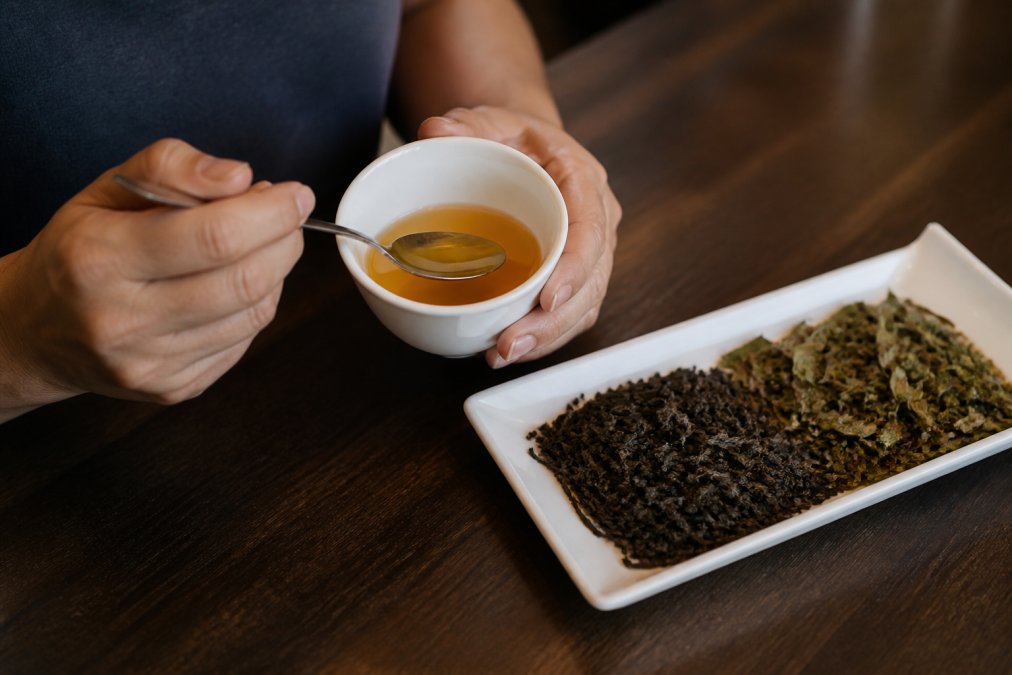
Think about the immediate impression. Is the tea delicate or bold? Smooth or brisk? Do you notice sweetness, bitterness or a drying sensation?
This is also a good moment to resist deciding immediately whether you like the tea. Give it a few sips and notice how the experience develops as the cup cools.
For a beautifully presented way to explore tea, you can also discover Basilur's Rare Tea Luxury Wooden Gift Box.
Step 4: Identify Flavour Notes, Mouthfeel and Finish
Once you have noticed the aroma and first sip, concentrate on three characteristics: flavour, mouthfeel and finish.
Flavour
Begin broadly.
Does the tea seem floral, fruity, malty, vegetal, spicy, roasted or earthy?
Then become more specific if something familiar comes to mind. A citrus character might remind you specifically of lemon or orange peel. A fruity note might remind you of stone fruit or dried fruit.
These descriptions are personal associations rather than ingredients that must literally be present in the tea.
Mouthfeel
Mouthfeel describes the physical sensation of tea in your mouth.
Some teas feel light and delicate, while others can seem fuller or more rounded. You might also notice smoothness or a drying sensation.
That drying or puckering sensation is known as astringency. It is different from bitterness and can naturally occur in tea.
Neither a light nor full-bodied tea is automatically better. These characteristics simply help describe the drinking experience.
Finish
Finally, notice what remains after you swallow.
Does the flavour disappear quickly, or does something continue to linger?
Perhaps a floral, sweet, malty or refreshing impression remains for several moments. This lingering sensation is commonly described as the finish or aftertaste.
Do not rush this stage. Sometimes the most interesting impression of a tea appears after the sip itself.
Your Tea Tasting Notes Guide: Scorecards and Vocabulary
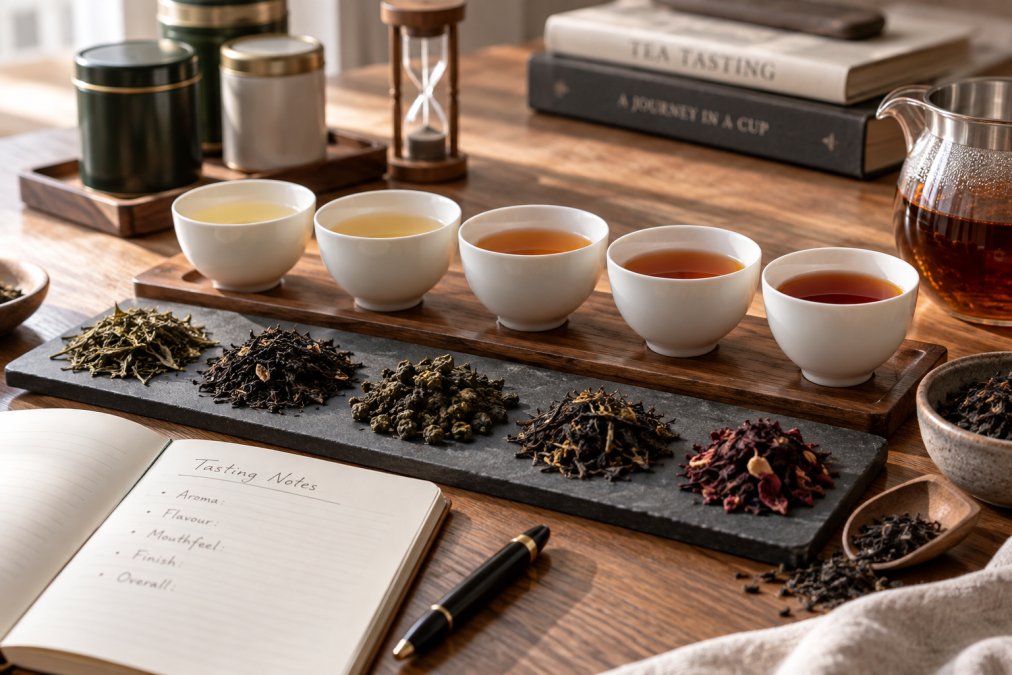
Keeping notes can help you remember teas you particularly enjoyed and compare them over time.
You do not need a complicated professional scoring system. A simple tasting record works well:
Category |
What to Assess |
Score (1-5) |
|---|---|---|
Dry leaf |
Size, uniformity, colour, scent |
|
Aroma |
Wet leaf fragrance, complexity |
|
Liquor |
Colour, clarity, brightness |
|
Flavour |
Notes, balance, intensity |
|
Mouthfeel |
Body, viscosity, texture |
|
Finish |
Length, evolution, cleanliness |
Troubleshooting your tasting sessions
If every tea seems to taste similar, do not assume you simply have an undeveloped palate.
Start by simplifying the tasting.
Compare only two teas at once. Brew them carefully and change as few variables as possible.
If the tea tastes overly bitter or astringent, review the brewing instructions. Too much leaf, excessively hot water or a longer infusion than recommended for that particular tea can change the result.
If the tea seems muted, consider the water you are using and whether the tea has been stored appropriately.
Most importantly, taste the tea more than once. Familiarity makes differences easier to recognise.
UC Davis Coffee Center research on sensory evaluation methods
The Best Water Temperature for Tea (and Why Steep Time Matters)
There is no single perfect water temperature or steeping time for every tea.
Different tea types respond differently to heat and infusion time. Delicate teas are often prepared at lower temperatures, while many black teas and herbal infusions are brewed using hotter water.
As broad starting points:
Tea Type |
Water Temperature |
Steep Time |
|---|---|---|
White tea |
75-80°C |
2-3 minutes |
Green tea |
75-80°C |
1-2 minutes |
Oolong tea |
85-90°C |
2-4 minutes |
Black tea |
95-100°C |
3-5 minutes |
Herbal infusion |
100°C |
5-7 minutes |
How to Store Loose Leaf Tea So the Flavour Holds
Good storage helps protect the characteristics you are trying to appreciate.
Tea should generally be kept in a well-sealed container away from excessive heat, moisture, direct light and strong surrounding odours.
This is particularly important because tea can pick up unwanted aromas from its surroundings.
Avoid keeping loose leaf tea open beside strongly aromatic spices, coffee or other foods. A dedicated tea tin or suitable airtight container kept in a cool, dry cupboard is a practical choice for most homes.
Good storage does not need to be complicated. The aim is simply to protect the tea between one tasting session and the next.
Frequently Asked Questions
What are the five steps of professional tea tasting?
Professional tasting follows a set order: inspect the dry leaf, smell the infused leaf, assess the liquor colour, sip and aerate the tea, then note the aftertaste and finish. Each step builds on the last, so skipping one costs you detail. A trained palate can pick up astringency, sweetness and floral notes within seconds, but the full picture only comes from working through all five in sequence.
How do you develop a palate for high-quality tea?
Taste the same tea repeatedly and change one variable at a time, such as water temperature or steep time. Keep a tasting notes guide so you can compare sessions. Try a pure Ceylon Pekoe like Basilur's Golden Crescent alongside a blended tea and note where the flavour sits. Within a few weeks of deliberate practice, most people catch notes they missed at the start.
What is the difference between aroma and flavour in tea tasting?
Aroma is what you detect through the nose before and during sipping. Flavour combines that aroma with what your tongue registers: sweetness, bitterness, umami and astringency. Block your nose while sipping and most of the flavour disappears, which shows how much aroma carries the experience. Connoisseurs describe both separately because they often point to different things about the leaf.
How does water quality affect the taste of premium tea?
Water makes up over 99% of your cup, so its mineral content matters. Hard water with high calcium dulls aroma and can make tea taste flat or chalky. Soft or filtered water lets the leaf's natural sweetness and floral notes come through. If your tap water smells of chlorine, filter it or use bottled still water before brewing any premium loose leaf tea.









Comments (0)
There are no comments for this article. Be the first one to leave a message!