
Table of Contents
- Why Buy Artisanal Ceylon Tea Online in 2026
- Loose Leaf vs Tea Bags: What You Get When You Buy Artisanal Ceylon Tea Online
- Ceylon Tea Grades Explained: From OP to Pekoe
- Single Origin Ceylon Tea Benefits: Why Origin Matters
- How to Brew the Perfect Cup of Ceylon Tea
- Tasting Notes, Sustainability, and Storing Your Tea
- Frequently Asked Questions
Last Updated: September 17, 2026
Why Buy Artisanal Ceylon Tea Online in 2026
The case for buying artisanal ceylon tea online comes down to freshness and traceability, two things supermarket shelves rarely deliver. When you buy artisanal ceylon tea online from a specialist, you typically get tea packed close to harvest rather than sitting in a warehouse for months. This guide from Basilur Tea walks through grades, brewing, and storage so your first order lands well.
Loose Leaf vs Tea Bags: What You Get When You Buy Artisanal Ceylon Tea Online
Loose leaf tea gives you whole, unbroken leaves that unfurl fully during steeping, releasing more flavor and aroma than the broken pieces inside most tea bags. Tea bags trade quality for convenience, and that trade is steeper than most people realise.
- Loose leaf: whole leaves, better infusion, reusable across multiple steepings, needs a strainer or infuser
- Tea bags: consistent portioning, faster cleanup, but often contains dust and fannings with less complexity
Ceylon Tea Grades Explained: From OP to Pekoe
Ceylon tea grades are a classification system based on leaf size, leaf style, and appearance, not on quality alone. Two teas can share a grade and taste completely different, because grade describes what the leaf looks like, while flavour comes from elevation, cultivar, season, and processing. Understanding the letters helps you match a tea to your preferred strength and brewing style before you buy.
What the Letters on the Packet Mean
The letters on a Ceylon tea packet describe leaf style and size. Here is how to read the common codes:
- OP (Orange Pekoe): long, thin, rolled whole leaves. The baseline whole-leaf grade.
- P (Pekoe): shorter, fuller leaves picked earlier. Slightly brisker and more open than OP.
- FOP (Flowery Orange Pekoe): OP with a proportion of tips (the young, pale leaf buds). More aromatic and usually more expensive.
- GFOP (Golden Flowery Orange Pekoe): FOP with a higher proportion of golden tips. Sweeter, rounder cup.
- TGFOP (Tippy Golden Flowery Orange Pekoe): the tip-heavy end of the FOP family. Delicate, floral, and the grade most often used for high-grown estate teas.
- BOP (Broken Orange Pekoe): broken leaves rather than whole. Brews faster and stronger, and is the workhorse grade for everyday black tea and for blends taken with milk.
- BOPF (Broken Orange Pekoe Fannings): smaller broken pieces. Fast, strong, and the grade most often found inside standard tea bags.
- Dust: the smallest grade. Brews almost instantly and is used in the cheapest bags.
High-Grown vs Low-Grown Grades
Elevation is the other half of the story, and it is not part of the grade code, you have to look for it on the label or in the product description.

- High-grown (roughly 1,200 m and above): slower growth concentrates flavour and produces a lighter, more aromatic liquor with brisk, sometimes citrusy notes. The classic high-grown districts are in the central highlands.
- Mid-grown (roughly 600-1,200 m): a middle ground, more body than high-grown, more aroma than low-grown.
- Low-grown (below roughly 600 m): faster growth in warmer conditions gives a stronger, fuller-bodied, often maltier cup. Suits milk and a morning brew.
Single Origin Ceylon Tea Benefits: Why Origin Matters
Single origin Ceylon tea comes from one growing region, which means its flavor reflects a specific terroir rather than a blend designed for consistency. That traceability is the core benefit: you can taste the character of a place, and you can return to it.
How to Brew the Perfect Cup of Ceylon Tea
Brewing the perfect cup of Ceylon tea starts with water temperature and steeping time, and both change depending on whether you're working with black or green leaf. Get these two variables right and the rest is easy.
Water Temperature and Steeping Time by Tea Type
| Tea Type | Water Temperature | Steeping Time | Notes |
|---|---|---|---|
| Black Ceylon | 95-100°C | 3-5 minutes | Fuller body, pairs with milk |
| Green Ceylon | 75-80°C | 2-3 minutes | Delicate, avoid boiling water |
| White Ceylon | 80-85°C | 3-4 minutes | Light and floral |
| Herbal infusions | 95-100°C | 5-7 minutes | Caffeine-free options |
Use roughly one teaspoon of loose leaf per cup, or adjust to taste. Over-steeping black tea draws out excess tannins and turns the cup bitter, so set a timer the first few times.
Tasting Notes, Sustainability, and Storing Your Tea
Flavour profiling is where artisanal Ceylon tea rewards attention, and it is the part most online shops skip. Elevation, season, and processing all leave a signature in the cup, and learning to read those signatures is what turns a purchase into a repeat order.
A Sensory Guide to Ceylon Tea
- High-grown black: lighter body, brisk and bright, with citrus, floral, and sometimes a faint eucalyptus or menthol note on the finish. Best drunk without milk so the aromatics are not buried.
- Mid-grown black: more rounded, a balance of brightness and body, often with a honeyed or lightly malty middle.
- Low-grown black: fuller-bodied and maltier, with deeper colour and a stronger tannic grip. Stands up to milk and to a morning brew.
- Green Ceylon: grassy, vegetal, and slightly marine, with a cleaner, less astringent finish than most green teas. Delicate, it scalds easily.
- White Ceylon: the lightest of the family, floral, honeyed, and soft, with very low astringency. Best treated gently.
A common pattern among experienced drinkers is to taste the same estate across two seasons. Ceylon tea is seasonal, and the difference between a spring flush and a later flush from the same garden can be as large as the difference between two estates.
Pairing Ceylon Tea with Food
Pairing follows the same logic as the flavour guide, match weight to weight.
- High-grown black: light cakes, shortbread, afternoon tea, and mild cheeses. The briskness cuts through butter and cream.
- Low-grown black: richer fare, chocolate, spiced biscuits, and heavier desserts. The malt and tannin hold their ground.
- Green Ceylon: lighter fare, salads, steamed fish, and delicate pastries, where you do not want the tea overwhelmed.
- White Ceylon: fruit, mild cheeses, and on its own. Its subtlety is easily lost alongside strong flavours.
Sustainability and Ethical Sourcing
Beyond the organic label, the question worth asking is how the tea was bought. Many estates now pursue organic certification and biodynamic methods, and direct trade arrangements are becoming more common as buyers ask where their tea actually comes from. Fair trade and ethical sourcing arrangements aim to return a larger share of the retail price to the estate and its workers, and to fund community projects such as housing, healthcare, and schooling on or near the estate.
Keeping Loose Leaf Tea Fresh
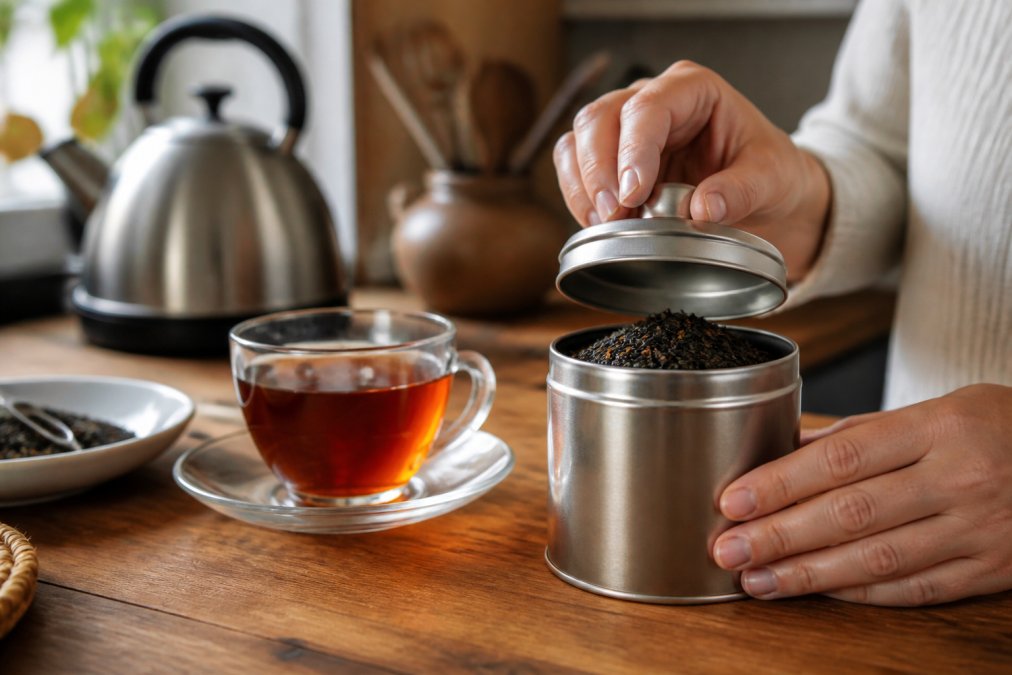
Tea is perishable, and the enemies are light, heat, moisture, air, and strong smells. Store loose leaf tea in an airtight container away from light and heat. A metal caddy works well because it blocks light and seals properly. Keep it out of the cupboard above the stove, and away from coffee, spices, and anything else with a strong aroma, tea absorbs odours readily.
Frequently Asked Questions
Can I buy Ceylon tea in Australia?
Yes. Artisanal Ceylon tea is widely available online, and buying direct means you can trace the tea back to specific estates and grades rather than a generic blend. Look for labels stating high-grown, single-origin, or a named grade such as Pekoe or OPA. Australian delivery times from local stockists are typically a few business days, and prices range from around $11 for 25 enveloped bags to $25 for a 100g loose leaf caddy.
What distinguishes artisanal Ceylon tea from mass-produced varieties?
Artisanal Ceylon tea comes from small, carefully managed harvests where leaves are hand-picked and processed in smaller batches. Mass-produced supermarket tea often uses dust and fannings, which are the smaller particles left after sorting, and these brew quickly but lose nuance. Artisanal loose leaf keeps whole leaves intact, so you get layered flavour notes, a brighter liquor, and the ability to re-steep the same leaves two or three times.
Is drinking Ceylon tea good for you?
Ceylon tea naturally contains antioxidants and tannins, and black, green, and herbal varieties all deliver different levels of caffeine. A cup of black Ceylon tea generally has less caffeine than coffee, making it a practical everyday option. If you are cutting back on caffeine, herbal blends are naturally caffeine-free. Ceylon tea is a beverage, not a treatment, so treat any wellness benefit as part of a balanced routine rather than a cure.
How do I identify high-quality single-origin Ceylon tea?
Check three things: the grade, the elevation, and the leaf appearance. High-grown teas from estates above roughly 1,200 metres tend to have brighter, more aromatic flavour notes. Whole, well-twisted leaves in a consistent size suggest careful harvesting and processing. Packaging should name the origin and grade rather than just saying 'Ceylon blend'. A foil pouch with a zipper lock inside a metal caddy, like Basilur's Golden Crescent Pekoe, protects those qualities far better than a paper box.
The challenge with buying tea online is that you can't smell the leaf before you commit. Basilur Tea solves that by sourcing pure Ceylon tea and packing it to preserve freshness, with sophisticated packaging that makes it a genuine gift option. Whether you choose the Specialty Classics loose leaf or the Ceylon Original refill pack, you're getting tea built for a proper cup. Get started with Basilur Tea and taste what single origin Ceylon actually delivers.









Comments (0)
There are no comments for this article. Be the first one to leave a message!