

Why Loose Green Tea Leaves Need a Careful Brew
Loose green tea leaves reward a little care. Green tea is delicate, and the wrong water or too much time in the pot can turn a fresh, mild cup into something grassy and bitter. The good news is that a few simple habits make a real difference, and you don't need specialist equipment to get them right.
The brewing method matters, especially with green tea. Once you know the basics of temperature, time and quantity, you can taste what each style is meant to offer, from the gentle sweetness of a sencha to the nutty warmth of a genmaicha.
- Green tea is more sensitive to heat than black tea
- Loose leaves give more room for the leaves to open and release flavour
- A consistent method makes it easier to find your favourite cup
Loose Green Tea Brewing Temperature by Style
Most loose green teas taste best at a lower temperature than boiling water. Water that is too hot scorches the leaves and brings out harsh, bitter notes. A good starting point for most green teas is water around 70 to 80°C.
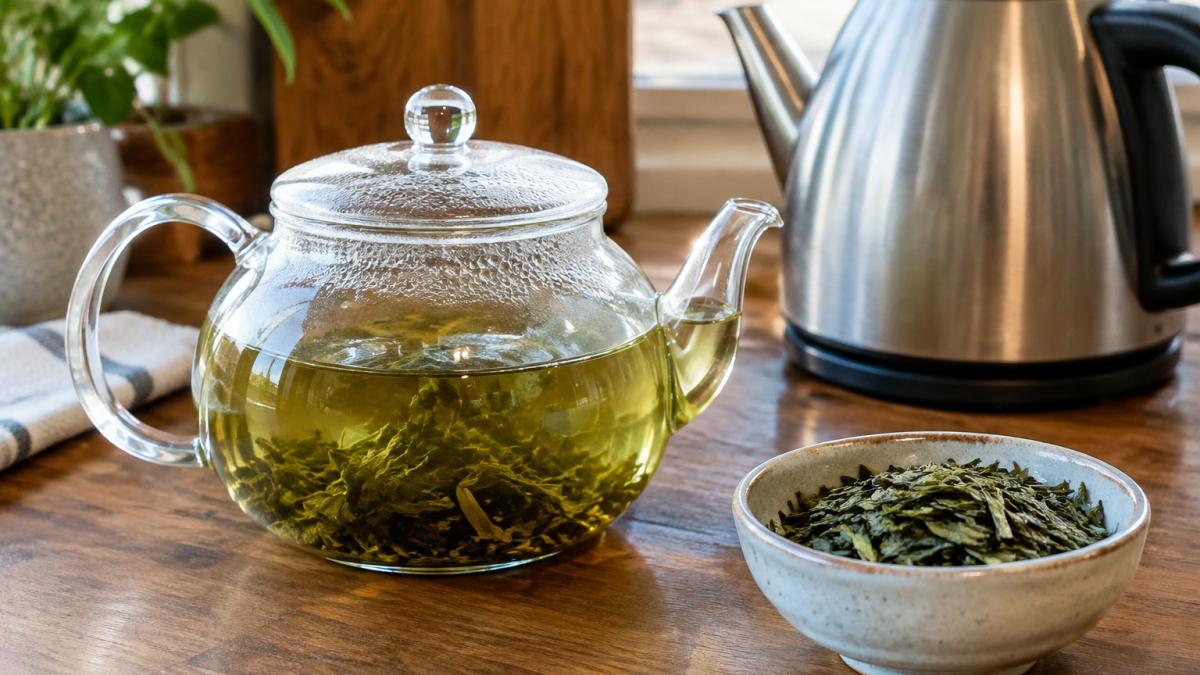
The reason comes down to the leaf. Green tea is minimally oxidised, which makes it more sensitive to heat than fully oxidised black tea, so it generally needs a gentler hand.
Delicate styles like Japanese sencha often do well at the lower end of that range. Heartier leaves can handle a little more heat. Try a lower temperature first, then adjust to your taste.
- Delicate green teas (sencha, gyokuro-style leaves): around 70 to 75°C
- Standard green teas: around 75 to 80°C
- Roasted or toasted blends (genmaicha, hojicha-style): around 80 to 85°C
- Green teas with added botanicals or fruit: around 75 to 80°C, so the botanicals do not turn sharp
Watch out: boiling water is the most common cause of a bitter green tea cup. If your kettle has no temperature setting, let it stand for a minute or two after boiling before you pour, roughly one minute brings a full boil down towards the low 80s, and two minutes closer to the mid 70s, depending on the room and the vessel.
A simple way to hit a target without a variable kettle is to boil fresh water, pour it into a cool teapot or jug first, then pour it over the leaves. The transfer drops the temperature and gives you a margin of safety. If you do have a variable kettle, set it and trust it rather than guessing.
Temperature also changes how many infusions a leaf will give. A cooler first steep extracts more slowly, so the leaves often hold up for a second or third pour. A hotter first steep pulls the flavour out fast and can leave the second infusion flat. If you plan to re-steep, start at the lower end of the range for that style and add around 5°C for each subsequent infusion.
Pick up the Specialty Classics - Sencha Tea - 100g Loose Leaf Green Tea to try these temperatures on a classic Japanese-style sencha. Its mellow, smooth flavour is described as a gentle, pleasant brew.

The table below sums up the brewing temperature for each style of loose green tea.
Tea style |
Water temperature |
Note |
|---|---|---|
Delicate green teas (sencha, gyokuro-style) |
Around 70 to 75°C |
Gentle, avoids bitterness |
Standard green teas |
Around 75 to 80°C |
Suits everyday green tea |
Roasted or toasted (genmaicha, hojicha-style) |
Around 80 to 85°C |
Heartier leaves handle more heat |
Green teas with botanicals or fruit |
Around 75 to 80°C |
Stops botanicals turning sharp |
Water temperature
Loose Green Tea Steeping Time and Leaf-to-Water Ratios
Steeping time and the amount of leaf you use work together. Green tea usually needs a shorter steep than black tea. Two to three minutes is a common range, and you can taste as you go.
For the leaf itself, start with about one teaspoon of loose leaves for each 250 ml cup. Adjust after your first brew. More leaf makes the cup stronger, and less makes it lighter. A level teaspoon of a fine sencha weighs noticeably more than a level teaspoon of a fluffy, long-leaf style, so the spoon is a starting point rather than a fixed rule.
A more reliable way to think about it is as a ratio. A common starting ratio for loose green tea is around 2 to 3 grams of leaf per 250 ml of water, roughly one level teaspoon for a fine leaf, or a heaped teaspoon for a bulky one. If you have a small kitchen scale, weighing the first few brews teaches you what a teaspoon of your particular tea actually looks like, and you can eyeball it from there.
- Short steep (1 to 2 minutes): lighter, fresher flavour, best for delicate sencha and gyokuro-style leaves
- Medium steep (2 to 3 minutes): balanced and smooth, a good default for most everyday green teas
- Long steep (3 minutes or more): stronger, but risks bitterness, so taste early and strain promptly
Time and quantity trade off against each other. If you want a stronger cup, you can add more leaf and keep the steep short, or keep the leaf the same and steep longer, but the first route usually gives a cleaner flavour, because a long steep pulls out the astringent compounds along with the good ones. A common pattern among regular drinkers is to use a little more leaf and a shorter steep for a sweeter, more forgiving cup.
Style changes the numbers too. Japanese sencha tends to prefer a shorter, cooler steep, while a roasted or toasted blend can take a slightly longer one without turning harsh. Green teas with added fruit or botanicals often give their best flavour at the medium end, so the added ingredients have time to infuse without the tea itself going flat.
If you plan to re-steep, keep the first infusion short and add roughly 30 seconds to a minute for each subsequent pour. The leaves have already opened, so they give up their flavour faster the second time around.
Want to refine these ratios? A deeper guide on brewing whole leaf tea explains how to get more flavour from every spoonful.
How Much Loose Leaf Tea per Cup to Use
Measuring loose tea by eye is easy once you have a baseline. A single teaspoon is a good starting measure for a 250 ml cup of green tea. Level spoons give you more consistent results than heaped ones.
If you don't have a scale, use a teaspoon and note how the cup tastes. Over a few brews, you will learn the right amount for your own palate. Practical methods for measuring loose leaf tea without scales cover more ways to get it right.
Straining and Infusing Loose Leaves Without Special Equipment
You don't need a dedicated tea maker to brew loose leaves well. A simple infuser basket, a fine mesh strainer or even a teapot with a built-in filter will do the job. The key is giving the leaves room to unfurl while keeping them out of the final cup.
Pour the water over the leaves, let them steep for the chosen time, then strain them out promptly. Leaving spent leaves in the water is the easiest way to overbrew a cup without noticing.
Fixing Bitter, Weak or Over-Steeped Green Tea
When a cup goes wrong, the fix is usually one of three things. Bitterness often means the water was too hot or the steep ran too long. A weak cup usually needs more leaf or a longer steep. Over-steeped tea tastes flat and astringent.
- Too bitter: lower the temperature and shorten the steep
- Too weak: add a little more leaf next time
- Too astringent: strain the leaves sooner
Change one thing at a time so you can see what works.
Storing Loose Leaves and Reusing Tea Tins
Light, air, heat and moisture all dull green tea over time. Keep your loose leaves in an airtight container away from the stove and sunlight. A tin with a tight lid works well, and so does a foil pouch with a zip seal.
Many people reuse tea tins for storage, which is a sensible habit. Detailed guidance on keeping loose leaf tea fresh after opening covers the storage details. Make sure the tin is clean and completely dry before you add fresh leaves, so no old flavours or moisture get in. Store the leaves in a cool, dark cupboard.
- Keep leaves airtight and dry
- Store away from heat, light and strong smells
- Reuse tins only after they are fully clean and dry
Choosing Your Next Loose Green Tea to Brew
Once you have the method down, the fun is in choosing what to brew next. Sencha is a clean, classic choice for everyday drinking. Something with a little extra character, such as a green tea with mint, can make a refreshing afternoon cup.
Our Summer Tea Tin Caddy - 100g Loose Leaf Sencha Green Tea is a seasonal blend of sencha green tea with wild strawberry and colourful flower petals. If you want something cool and bright, you can also explore green tea meets mint for ideas on refreshing blends.
Start with the temperatures and ratios above, taste as you go, and adjust to suit you. Once you find the cup you love, brewing it becomes second nature. Browse the Basilur Tea range to find your next loose green tea to brew.
Frequently Asked Questions
How do you brew loose green tea leaves?
Heat fresh water until it is hot but not at a rolling boil, pour it over one teaspoon of loose leaves in a warmed pot or infuser, and steep for the time suited to the style. Strain or remove the leaves once the time is up, so the tea does not turn bitter. Most green teas taste best when the water is cooler than black tea water, and the leaves should unfurl fully as they steep. Adjust one variable at a time if the cup tastes off, starting with the steeping time.
How much loose green tea should you use per cup?
A common starting point is one teaspoon of loose leaves for about 250 ml of water. Leaves that are rolled tightly or cut finely may need a little less, while bulky, lightly rolled leaves may need a little more to give the same strength. Measuring by eye is fine once you know your preferred strength. Write down what you use and adjust it gradually, since small changes in leaf quantity make a noticeable difference in flavour.
Can you reuse loose green tea leaves for another infusion?
Yes, most loose green teas can be infused two or three times. The second infusion is usually lighter and more delicate, and it may need a slightly longer steep to bring out the flavour. Keep the leaves in a clean pot or infuser between steeps and use fresh hot water each time. Leaves that have been steeped more than once should be used the same day, as they lose freshness quickly once wet.
How should you store loose green tea leaves?
Store loose green tea in an airtight, opaque container away from heat, light, moisture and strong odours. Green tea is unfermented, so it loses freshness faster than black tea, and a sealed foil pouch or a tin with a tight lid protects it well. Keep the container in a cool cupboard rather than near the stove or in the fridge, where condensation can form when the lid is opened.










Comments (0)
There are no comments for this article. Be the first one to leave a message!