
Why Sustainability Standards Matter for Premium Tea
Sustainability standards for premium tea companies are the documented rules, certifications and internal controls that prove a leaf was grown, picked, processed and packed without harming the people or places involved.
That distinction now drives buying decisions. Shoppers who pay more for a Ceylon single origin want to know the estate was paid properly, the soil was not stripped, and the box in their hands is not headed for landfill.
The commercial case is just as blunt. Voluntary standards have become the common language between growers, packers, retailers and regulators. Without them, a premium brand has no defensible answer when a customer, a wholesaler or a journalist asks a hard question about origin.
Below, we break down what each major certification actually covers, where sourcing decisions force trade-offs, and how to build reporting and packaging that hold up. Watch out: the most common mistake is adopting a logo without changing the practices behind it.
Sustainable Tea Certifications: What Each One Actually Covers
No single certification covers everything, which is why serious buyers read the scope, not the badge. The useful questions are always the same: what does the standard actually govern, how is compliance assured, how far along the chain does the certificate reach, and what does it leave out? Answer those four and you can choose standards deliberately rather than collecting logos.
- Organic certification governs farming inputs: which pesticides, herbicides and fertilisers are permitted, how soil fertility is maintained, and how contamination is prevented along the supply chain. Assurance is typically an annual inspection by an accredited certification body, with input records and residue testing as evidence. It reaches the farm and, through chain-of-custody requirements, the handler, but it says nothing about worker wages or packaging.
- Fair Trade focuses on producer welfare: minimum prices, premiums paid to cooperatives, and democratic decision-making about how that money is spent. Assurance combines audit reports with premium payment records. It covers the producer organisation and the buyer's payment trail, but it is not an environmental standard and does not certify biodiversity or water use.
- Rainforest Alliance combines agricultural standards with environmental and social criteria, covering biodiversity, water use, deforestation and worker conditions on certified farms. Assurance runs through farm certification plus chain-of-custody, so the mark on a pack depends on the volume of certified leaf actually purchased. It is broader than organic or Fair Trade, but the depth on any single issue is shallower than a dedicated scheme.
- Agricultural standards more broadly set the baseline for farm management, record-keeping and continuous improvement. They are useful as a floor, not a ceiling, and they rarely carry the consumer recognition of the named schemes.
A tin can carry an organic mark and still sit in a non-recyclable wrapper. It can carry a fair trade mark and still travel a route nobody can trace. That gap is where reputations are lost.
If you want to see what certified organic looks like on a shelf, our Sencha Ceylon green tea is a useful reference point for how a premium product presents its credentials.
A Practical Standards Matrix for Premium Tea Companies
Use this to map what each standard actually governs before you commit to a logo:
Standard |
Primarily covers |
Assurance method |
Chain-of-custody reach |
Key limitation |
Best for |
|---|---|---|---|---|---|
Organic certification |
Farm inputs, soil, contamination control |
Accredited inspection, input records, residue testing |
Farm and handler |
Silent on wages, biodiversity, packaging |
Brands selling health and purity |
Fair Trade |
Producer pricing, premiums, cooperative governance |
Audit reports, premium payment records |
Producer organisation and buyer payments |
Not an environmental standard |
Brands leading on worker welfare |
Rainforest Alliance |
Biodiversity, water, deforestation, labour |
Farm certification plus chain of custody |
Farm through to packer, volume-based |
Shallower per issue than dedicated schemes |
Brands balancing social and environmental claims |
Internal code of conduct |
Anything the above miss |
Supplier declarations, site visits |
Whole supply chain |
No external assurance |
Every brand, as a backstop |
The matrix matters because premium buyers increasingly ask which standard applies to which part of the journey. A single answer rarely covers the whole leaf. A common pattern is to pair one farm-level scheme with an internal code that closes the gaps on packaging, wages and traceability, and to state plainly which standard covers which stage.
Watch out: a certificate held by a supplier does not automatically extend to the leaf you bought from them; check the chain-of-custody paperwork matches the volume and the batch.
Ethical Tea Sourcing and the Quality Trade-Offs Nobody Mentions
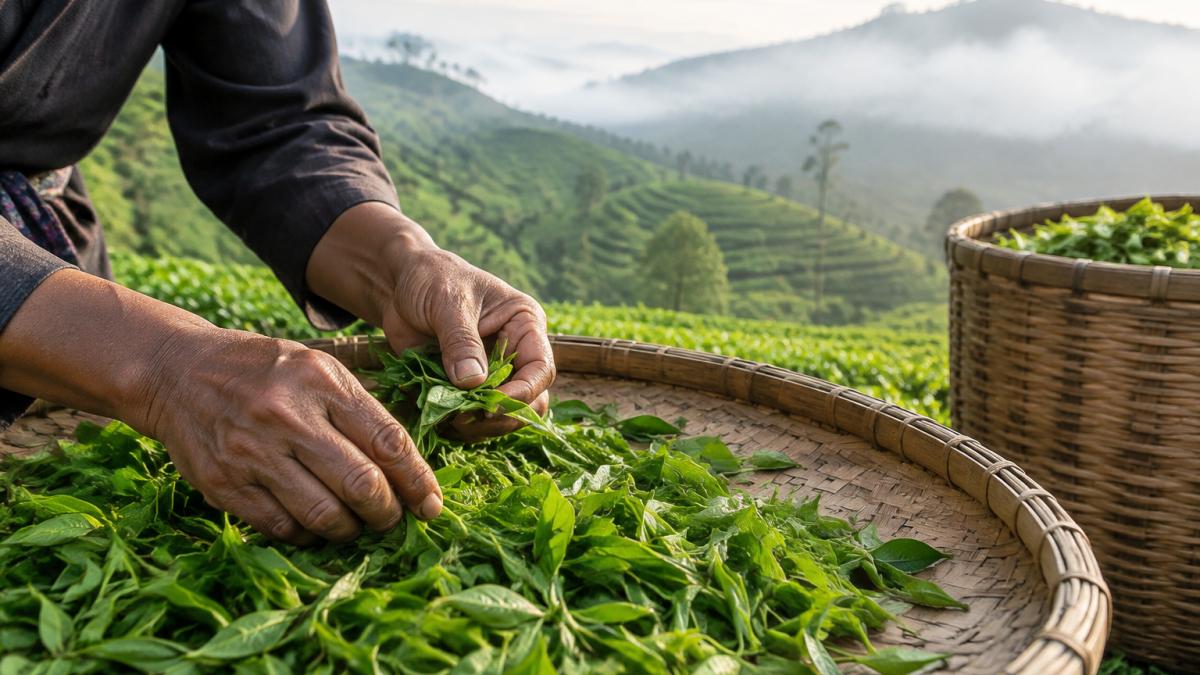
Ethical tea sourcing is the practice of buying leaf under terms that protect growers, workers and land, and it almost always costs something at the quality end. That is the part the brochures leave out.
Origin. A named single estate gives you a cleaner chain of custody and a more uniform cup, which makes certification evidence easier to assemble.
Cultivar. Premium demand concentrates on a small number of favoured cultivars, and that concentration can push growers toward monoculture and higher input use to protect yield.
Harvest season. First-flush and early-season leaf commands a premium and is picked in a narrow window, when labour pressure is highest.
What most guides miss is that quality and ethics are not opposites, they are both managed through the same records. A premium blend built on a described origin and clear ingredient story, like our raspberry and rosehip loose leaf, is easier to stand behind when the sourcing trail is documented at every step.

The trade-off is real, though. The reward is a product you can defend without flinching.
Building a Tea Sustainability Report That Stands Up to Scrutiny
A tea sustainability report is a public document that sets out what a company measured, what it found and what it will change next. The test is simple: could an outsider check it?
Organic Bedtime Apple with Elderflower - 18 Tea Bags →
Structure it around four blocks. First, scope: which products, estates and suppliers are included. Second, method: how figures were gathered and what was estimated. Third, results: environmental, social and economic indicators, shown against a prior period. Fourth, commitments: specific, dated targets with named owners.
Sustainability reporting falls apart when it reads like a brochure. Numbers without a method are guesses. Targets without dates are wishes. A short, honest report with modest results beats a glossy one nobody can verify.
Keep the language plain and the caveats visible. If a figure is an estimate, say so. If a supplier could not be audited this year, say that too. Readers forgive gaps; they do not forgive spin.
Sustainable Tea Packaging: Materials, Waste and Circularity
Sustainable tea packaging means choosing materials and formats that keep the product fresh while cutting waste and keeping the material in circulation. For premium tea, that is a genuine design problem, because flavour depends on protection.
Start with the barrier. Tea needs protection from light, moisture and air, so the inner wrapper does the heavy lifting. Recyclable mono-material films and compostable options exist, but each has limits on shelf life and heat resistance. Test before you switch.
Then look at the box. Board from responsibly managed forests is widely recyclable and gives premium packaging its structure. Foil stamping, plastic windows and laminated finishes look expensive and often make the whole pack unrecyclable, which is where circularity breaks.
A practical rule: design for the kerbside bin your customer actually has. A pack that is technically recyclable but needs a specialist drop-off usually ends up in general waste.
Implementation Roadmap and Audit Readiness
Audit readiness is not a scramble in the final month. It is the natural result of running the standards day to day. Here is the sequence we would follow.
- Map the supply chain. List every supplier, estate and processor, and note which standards each holds.
- Choose your standards. Match certifications to your claims rather than collecting badges.
- Close the documentation gaps. Input records, premium payments, chain-of-custody certificates and training logs.
- Run an internal audit. Score yourself against the standard's criteria before anyone else does.
- Fix and evidence the fixes. An auditor wants to see the corrective action, not just the problem.
- Schedule the external audit. Build in time for findings and a follow-up cycle.
Expect the documentation to take longer than the farming changes. Most first-time failures are paperwork failures, not practice failures.
Substantiating Sustainability Claims Under Australian Consumer Law
Sustainability claims are regulated statements. In Australia, claims must be true, not misleading, and backed by evidence at the time they are made.
If you say "sustainable", be ready to explain precisely what that means and show the records behind it.
Claims substantiation comes down to three habits. Qualify broad words with specifics. Keep the evidence for every claim on file. And make sure the marketing team and the sourcing team are describing the same thing.
Choosing Your Next Cup With Standards in Mind
Standards only matter if they reach the cup. A brand can hold every certificate and still sell a product that disappoints, so read the label, ask where the leaf came from, and check whether the packaging matches the promise.
We built our range around that idea. Our premium packs pair Ceylon leaf with packaging designed to be kept, not binned, and our organic blends show what verified sourcing looks like in practice. If you are ready to taste the difference, browse the collection and pick the blend that suits your ritual.
Frequently Asked Questions
What sustainability standards apply to tea companies?
Tea companies typically work with a mix of third-party certification schemes (organic certification, Fair Trade, Rainforest Alliance) and voluntary agricultural standards covering pesticide use, soil health, water stewardship and worker welfare. Alongside these, sustainability claims should be accurate and not misleading. The practical stack for most premium tea companies combines one credible certification, an internal code of conduct for suppliers, and a published sustainability report that explains what is and is not covered.
How can you tell whether a tea brand sources tea ethically?
Look for traceability rather than logos alone. A credible brand can name the estates or regions it buys from, explain its chain of custody, and publish audit results or certification scope. Check whether certifications cover the specific product you are buying, not just the company's head office. Ethical tea sourcing also shows up in detail: fair wages for smallholder farmers, farm-level assurance programs, and a sustainability report that discusses problems as well as wins. Vague claims like 'responsibly sourced' without evidence are a warning sign.
How can tea packaging be assessed for sustainability?
Assess sustainable tea packaging across three dimensions: material (recyclable, compostable or recycled content), weight and format (less material per unit, no unnecessary layers), and end-of-life reality in the market where it is sold. A compostable pouch only helps if household composting is accessible; a recyclable box only helps if kerbside collection accepts it. Ask brands whether they have removed plastic from tea bags and inner wraps, and whether packaging waste reduction is measured in their sustainability reporting.
What should a tea company's sustainability report include?
A useful tea sustainability report covers scope (which products and suppliers are included), the standards and certifications relied on, measurable KPIs such as audit pass rates and packaging recyclability, and progress against previous targets. It should also address social sustainability (worker welfare, producer livelihoods) and environmental sustainability (pesticide use, biodiversity, carbon footprint). Claims should be substantiated and dated, with methodology explained so readers can judge them. Continuous improvement matters more than a perfect score.
The challenge is straightforward: hold every claim to a standard you could defend in front of a customer. Basilur Tea brings you premium Ceylon tea in sophisticated, timeless packaging, blended from the finest ingredients for a refreshing cup every time. Get started with Basilur Tea and choose a cup you can trace, taste and feel good about.










Comments (0)
There are no comments for this article. Be the first one to leave a message!