
Last Updated: November 3, 2026
Quick Summary
You can tell if a black tea is truly artisanal by checking for whole leaves, a named origin, a harvest date, and a seller who answers detailed questions. If two of those four signals are missing, keep looking.
- Whole leaves release flavour slowly and evenly, while dust releases everything at once and can turn bitter.
- Ceylon tea is graded by elevation, and high-grown leaves tend to be lighter, brighter, and more aromatic.
- Good dry leaf feels crisp and brittle and should snap between your fingers, not crumble into dust.
- Ask the seller which region and elevation the tea is from, what grade it is, and when it was harvested.
- Run the five-minute checklist: leaf photo, grade letters, origin detail, dates, contact and policy, and reviews.
Table of Contents
- What Makes Artisanal Black Tea Different
- How to Choose Black Tea Online Without Getting Burned
- Black Tea Origin and Harvest Information to Look For
- Why High-Quality Loose-Leaf Black Tea Beats Bags
- Reading the Leaf: Grade, Texture and Aroma Profile
- Questions to Ask a Tea Seller Before You Commit
- Checking Freshness, Storage and Digital Red Flags
- Choosing Your First Artisanal Black Tea
- Frequently Asked Questions
What Makes Artisanal Black Tea Different
Artisanal black tea is made in small, carefully controlled batches from whole leaves, with the maker controlling each step of oxidation and drying rather than pushing volume through a factory line.
How can you tell if a black tea is truly artisanal before buying online?
The word "premium" on a box means nothing, as it is not regulated. What you can verify is the leaf grade, the region, and the processing method.
Whole Leaf vs Tea Dust and Fannings
Whole leaf tea is exactly what it sounds like: intact leaves that unfurl in water. Tea dust and fannings are the tiny broken fragments left over after sorting, and they are what fills most supermarket tea bags.
Whole leaves release flavour slowly and evenly; dust releases everything at once, so the first sip is strong and the rest turns bitter.
Look for these signs of whole leaf:
- Long, wiry tips rather than uniform specks
- Leaves that look like leaves, not powder
- A dry leaf that holds its shape when you rub it
If a seller will not show you a close-up photo of the dry leaf, that is your first warning sign.
How to Choose Black Tea Online Without Getting Burned
Choosing black tea online comes down to one habit: buy from sellers who volunteer information before you ask. A quality seller shows the leaf, names the garden or region, states the grade, and dates the harvest.
Most online tea shops show a pretty box and a mood description, which tells you about their design team, not their tea.
A practical approach:
- Check whether the product page shows the dry leaf up close
- Look for a named region, not just "Ceylon" or "black tea"
- Confirm the grade letters are listed
If two of those four are missing, keep looking. Plenty of sellers do the work.
Black Tea Origin and Harvest Information to Look For
Origin and harvest information is the paper trail of a good tea. A serious seller tells you the region, the elevation, and the season the leaves were picked. Ceylon tea is graded by elevation: high-grown, mid-grown, and low-grown leaves taste noticeably different.
High-grown teas tend to be lighter, brighter, and more aromatic; low-grown teas are bolder and darker. Neither is better; they suit different moods.
Here is what a useful product page tells you:
- The specific region, such as Nuwara Eliya or Uva
- The elevation band the garden sits in
- The grade, in standard letters
Why High-Quality Loose-Leaf Black Tea Beats Bags
High-quality loose-leaf black tea beats bags for a simple reason: leaf size.
Bags are not evil; they are convenient, and some are well made. But most bagged tea uses dust and fannings because they brew fast and fill a bag cheaply.
Watch out: a brand can sell beautiful tins and still fill them with fannings. Always check what is inside the packaging.
If you want the deeper case for why leaf quality justifies a higher price, our breakdown of the signs premium loose leaf tea is worth the cost walks through what you are actually paying for.
Reading the Leaf: Grade, Texture and Aroma Profile
Reading the leaf means judging four things before you brew: grade, texture, uniformity, and aroma. These are the same checks a professional buyer makes at a cupping table, and you can do most of them from product photos and a sample.
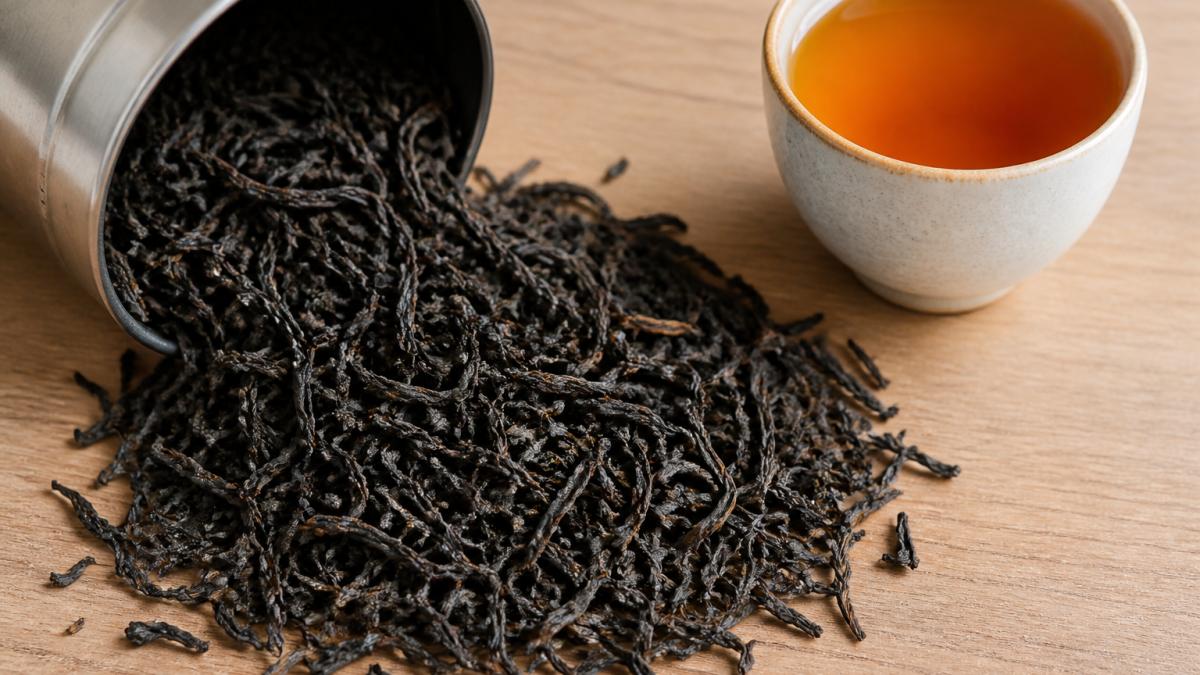
Start with texture. Good dry leaf feels crisp and slightly brittle, not soft or papery; rub a few leaves between your fingers and they should snap, not crumble into dust.
Next, check uniformity. Even leaf size means the tea was sorted properly, so every leaf brews at the same rate; mixed sizes brew unevenly and give you a cup that is both weak and bitter at once.
Then the aroma profile. Fresh black tea smells malty, sweet, or floral, depending on origin; stale tea smells flat, dusty, or like old cardboard.
Technical Grading Terminology Decoded
Tea grade letters look like a code, and they partly are. The letters are not a universal quality score, but they do tell you the leaf style and the size of the pieces, which is exactly what you need to predict how a tea will brew. Here is the plain-English version of the terms you will see most often on Ceylon listings:
The Island of Tea - Special Ceylon Black Tea - 100g Loose Leaf Tea →
| Term | What It Means | Why It Matters |
|---|---|---|
| Whole leaf | Intact leaves, sorted by size | Brews evenly, fuller flavour |
| Fannings | Small broken leaf pieces | Brews fast, turns bitter sooner |
| Tea dust | Fine particles | Strong colour, little nuance |
| FBOPF | Flowery Broken Orange Pekoe Fancy | Long wiry tips, high grade |
| FBOPF Ex. Spl. | Flowery Broken Orange Pekoe Fancy Extra Special | The tippiest grade, small output |
| OP | Orange Pekoe, large leaf | Light brew, best drunk straight |
| OP1 | Orange Pekoe 1, large leaf | Light brew, best drunk straight |
| BOP | Broken Orange Pekoe | Stronger, quicker brew |
| BOPF | Broken Orange Pekoe Fannings | Fast, strong, less nuance |
| Oxidation | The controlled resting that turns leaf black | Sets colour, body and tannins |
| First flush | The first picking of the season | Lighter, more delicate character |
Two things are worth knowing beyond the table. First, the letters describe leaf size and style, not flavour quality on their own: a well-made BOP can beat a poorly made OP. Second, "Fancy" refers to the presence of tips, not a marketing claim.
You do not need to memorise the whole table. To see how a full grade string looks on a real listing, our Leaf Of Ceylon Nuwara Eliya regional loose leaf tea names both the region and the leaf style.
Watch out: a listing can quote a high grade and still ship a different lot, so treat the grade as a claim to verify against the leaf photo and, ideally, a small sample before you commit to a larger tin.
Questions to Ask a Tea Seller Before You Commit
Ask a tea seller four questions before you commit, and you will learn almost everything you need. A good seller answers them without flinching. A vague seller dodges.
The four questions:
- Which region and elevation is this tea from? A real answer names a place, not just a country.
- What grade is the leaf? You want letters, not adjectives.
- When was it harvested and packed? Freshness has a shelf life.
- Is it whole leaf, or does it contain fannings? This is the one that separates honest sellers from clever ones.
We would add a fifth: can you describe the aroma profile in plain words? "Malty with a hint of citrus" tells you more than "exquisite."
If you are new to artisanal tea and want the wider case for seeking it out, our guide to the benefits of drinking artisanal black tea covers flavour, ritual, and why the extra care is worth it.
Checking Freshness, Storage and Digital Red Flags
Freshness and storage decide whether good leaf survives the trip to your kitchen. Black tea is shelf-stable when kept dry, dark, and sealed, but it fades with air and light.
Most guides stop at the leaf and the packaging. The bigger gap is the seller: whether the farm-to-cup story can actually be checked, and whether the shop behaves like a business you can hold to account.
Traceability: Can You Follow the Leaf Back to a Garden?
Traceability means you can name the region, the elevation band, the season, and, ideally, the garden or estate behind a specific lot. A serious seller volunteers this before you ask.
A practical traceability check on any product page:
- A named region, such as Nuwara Eliya or Uva, rather than just the country
- The elevation band the garden sits in
- The season or flush the leaves came from
If a seller cannot tell you which region a single-origin tea came from, treat the origin claim as decoration. You are not asking for a farm audit; you are asking whether the paper trail exists at all.
Digital Red Flags on an Online Tea Shop
Digital red flags are just as telling as a stale leaf. Watch for these on any online tea shop:
- No ingredient or grade information anywhere on the page
- Stock photos of tea that clearly do not match the product
- Reviews that all sound identical, or that appear only on the seller's own site
A seller who is proud of their tea shows it off; a seller who hides the leaf is hiding something else. A business that publishes a real address, a clear dispatch timeframe, and a straightforward returns policy is one you can hold to account if the tea arrives stale or not as described.
A Pre-Purchase Checklist You Can Run in Five Minutes
Run these checks in order before you commit to a first order:
- Leaf photo, is there a close-up of the dry leaf, not just the packaging?
- Grade letters, are they listed, and do they match the leaf style in the photo?
- Origin detail, is there a named region and elevation band, not just a country?
- Dates, is there a harvest or packing date, and does it sit sensibly against the season?
- Contact and policy, is there a real address, a dispatch timeframe, and a returns policy?
- Reviews, do reviews read like different people describing different cups, or like one voice repeated?
If two or more of those are missing, keep looking. For a benchmark of what a well-described tea looks like, our Special Ceylon black tea in a metal caddy shows the grade, leaf style, and packaging side by side, and our loose leaf refill packs are a low-risk way to test a leaf style before committing to a larger tin.

Watch out: a polished shopfront and a long origin story are not the same as traceability, so check that the named region on the product page matches the named region on the pouch you receive.
Choosing Your First Artisanal Black Tea
Start with a single-origin loose-leaf black tea from a named region, brewed light, and adjust from there. One good tea teaches you more than five mediocre ones.
For a first cup, use freshly boiled water, let it cool for a moment, and steep briefly.
For a first purchase, browse our loose leaf refill packs to find a leaf style that suits you.
Frequently Asked Questions
How can you tell if black tea is high quality before you buy it?
Look at the leaf first. High-quality artisanal black tea is whole leaf or long wiry tips, uniform in size and colour, not dusty or broken. Check the listing for a named origin, harvest date, and grade such as FBOPF or OP1, plus a sealed pouch rather than a loose bag. Aroma descriptors like malty, flowery, or bright should match the region. If the seller shows clear photos of the dry leaf and states how the tea was processed, that is a strong sign of quality.
What should I look for when buying black tea online?
Start with transparency. A trustworthy listing names the garden or region, the harvest season, the grade, and the processing method. Look for flavour-sealed foil pouches with a zipper lock, which protect the leaf from moisture and light. Check whether the seller explains steeping time and water-to-leaf ratio, since that shows they know the product. Photos of the actual leaf, not just the tin, help you judge uniformity and texture before you spend money.
Does the origin of black tea affect its flavour?
Yes, strongly. Terroir, altitude, and harvest timing shape the cup. Uva teas from the eastern highlands, grown around 900 to 1500 metres, are known for a smooth taste, with the finest seasonal teas picked from late July to mid-August. High-grown Ceylon teas tend to give a bright-coloured brew, while low-grown leaves are darker and richer. A seller who names the region and harvest window is giving you real information to judge flavour before you buy.
What questions should I ask a tea seller before buying?
Ask four things: where exactly the tea was grown, when it was harvested, what grade and processing method it has, and how it is packaged and stored. A good seller answers without hesitation and can explain the difference between whole leaf and fannings. Ask about the water-to-leaf ratio and steeping time they recommend, and whether they offer a freshness or quality guarantee. Vague answers about origin or grade are a warning sign that the leaf may not be truly artisanal.








Comments (0)
There are no comments for this article. Be the first one to leave a message!